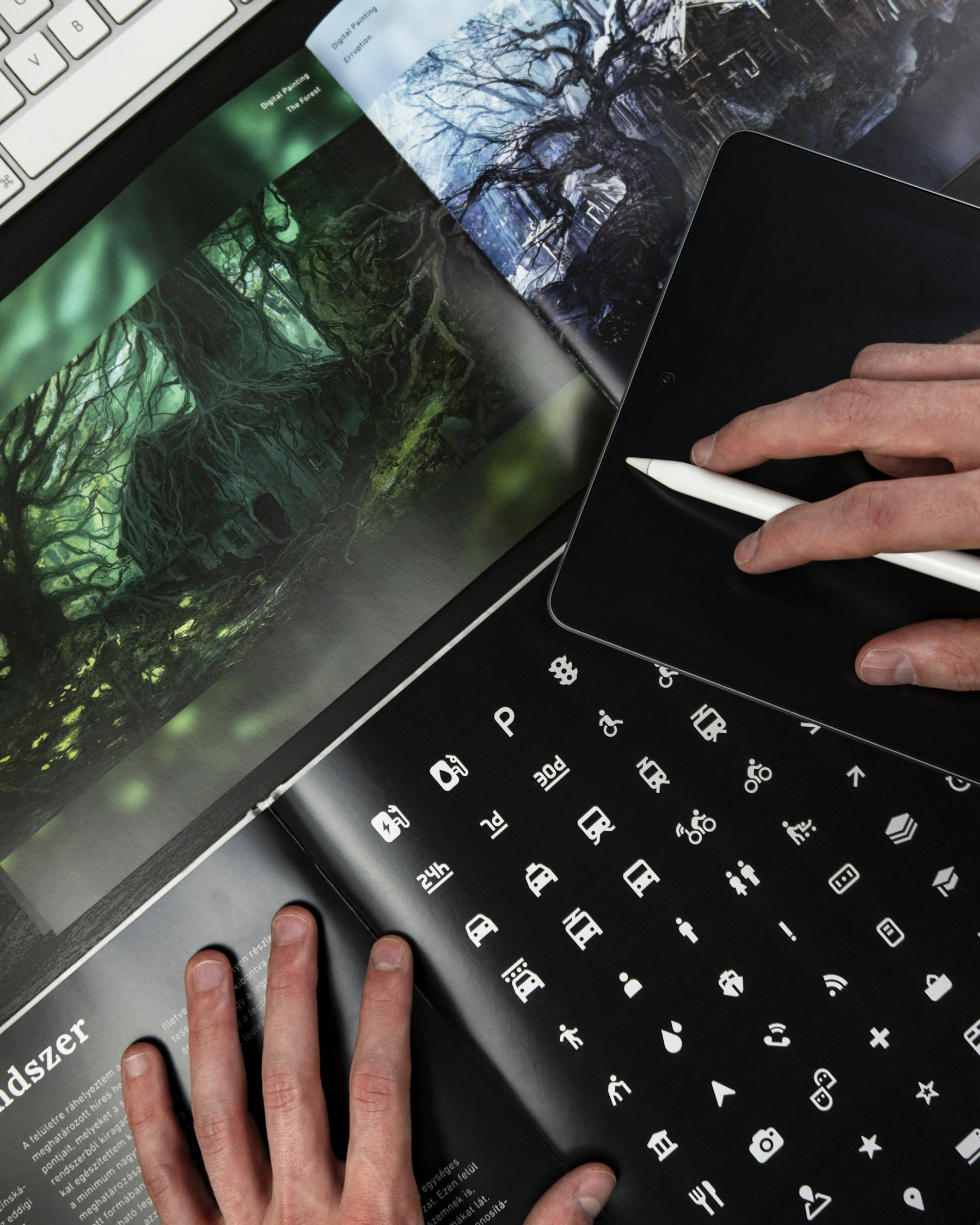
A design studio workstation with mood boards, color swatches, sketches, and a laptop showing wireframes

Website Design Services

Custom website design services built to convert.

The Turn Group is a Kansas City website design agency offering full-stack website design services: custom website design, responsive web design, UX design, UI design, branding and visual identity, conversion-focused website design, and accessibility-first website design. For 22 years our website design services have shipped websites that read like a top salesperson, an obsessive editor, and a thoughtful host. Custom website design systems, refined website templates, branded identities, and conversion-focused web design interfaces, engineered for the platform you already trust.

Our Belief

Design is the part of marketing that has to be true.

A logo can be charming. A headline can be clever. A site that finally clicks for someone is something else. It promises, then proves. It listens, then answers. It asks for attention only when it has earned it. That is the design we make. Not decoration. Not theater. A working surface for your brand to do its quiet, daily job of turning strangers into customers.

Most of what we ship has been said before by smaller, lesser things. We just say it cleaner. We thread a clear story through your homepage, your brand identity, your product pages, your search presence, and the AI that increasingly sits underneath all of it. The output is a website that respects your customer and rewards the team that has to live with it.

A designer sketching wireframe layouts on paper next to a laptop and color swatches
Process notebook, week one of every project.
  • 01

    Craft over trend

    A design that looks current next year is more valuable than one that looks new this morning. We choose typography, color, and rhythm that age well.

  • 02

    Accessibility is design

    WCAG 2.1 AA, Section 508, focus orders, contrast, captions, reduced motion. Designed in from the first frame, not retrofitted before launch.

  • 03

    Conversion is empathy

    A clear next step is a kindness. We remove friction so the people you serve can find what they came for and decide on their own time.

  • 04

    Built to ship

    Every artboard is engineered for the build that follows it. Tokens, components, grids, and copy ready for development on day one.

Designed For Three Audiences At Once

How do we design a modern website that works for the human, the search engine, and the AI engine?

Most studios optimize for one and hope the others follow. They never do. We treat the human visitor, the search crawler, and the AI retrieval engine as three customers who all walk in the front door, every day. Each one gets a story they can read.

For the Human

Customer experience

First impression in 50 milliseconds. Decision in three seconds. We design hierarchy, rhythm, and motion so the right person feels welcome and the right action feels obvious.

  • Visual hierarchy and typographic system
  • Conversion-optimized layouts and forms
  • Accessibility, contrast, focus states, captions
  • Mobile-first responsive grids and touch targets
  • Micro-interactions that respect attention

For the Search Engine

SEO by design

By the time a site reaches development, the most expensive SEO mistakes have already been made. We design search-friendly structure into the wireframe, not after launch.

  • Information architecture for search intent
  • Semantic HTML, headings, and landmarks
  • Schema-aware components from day one
  • Core Web Vitals budgets at the design stage
  • Internal link plan baked into the IA

For the AI Engine

AEO and GEO

ChatGPT, Gemini, Perplexity, and Google AI Overviews do not skim a website the way a human does. They need clean signals, clear citations, and answer-shaped content blocks.

  • Answer Engine Optimization layouts and Q&A blocks
  • Generative Engine Optimization for AI citation
  • Speakable selectors and llms.txt strategy
  • Structured FAQ, HowTo, and Article schema
  • Citation-friendly source attribution patterns

Wireframe Stage

Why does every project start with a wireframe on every screen size?

Before a pixel of color is painted, we draw the bones. Same content, three layouts, one promise: the design holds up the moment the device changes.

Same content. Three rhythms. We test layout, hierarchy, and tap targets on real devices before a single color decision is made. And the smallest screen gets the most attention, because that is where most of your visitors will see your site for the first time.

Mobile & Responsive

Why is every design built for the phone first?

The wireframe above proves the layout works at three sizes. Here is how we sweat the details on the one most people will hold in their hand. Thumb zones, fluid type, conditional images, network conditions, and Core Web Vitals on cellular all live at the design stage, not after launch.

01

Thumb-zone CTAs

Primary actions live where the thumb actually rests, not where the desktop wireframe forgot to look.

02

Fluid type

Headlines and body scale on a clamp curve, never breaking awkwardly between 320 and 1440.

03

Conditional images

Different crops, different sizes, different formats. The phone gets a tight portrait, not a desktop banner squeezed.

04

No horizontal scroll

Ever. Tables, charts, code blocks, and oversized media all have a mobile pattern engineered in design, not patched at QA.

05

Fast LCP on 4G

Largest Contentful Paint under 2.5 seconds on a slow connection. Designed in, never bolted on.

06

Touch targets that respect fingers

Forty-four pixels minimum, generous spacing between interactive elements, focus states that work for every input.

What We Design

Twelve disciplines, one design system, every project.

Our practice is intentionally broad and uncomfortably deep. Pick a single capability or commission the entire studio. Every engagement begins with a free consultation and a written plan.

A high-fidelity mockup on a designer's screen with annotated specs
01

Custom Website Design

Bespoke layout, typography, and component systems aligned to your brand and audience. The right answer for businesses that want their site to look like nothing else online.

02

Template Refinement

Curated CMS and theme starts, refined into accessible, conversion-focused experiences. Faster to ship. Friendlier to budget. Just as polished.

03

Branding & Identity

Logos, brand systems, type and color direction, and identity guidelines that travel cleanly across every channel. Our dedicated branding studio is one click away.

See branding work →
A laptop showing a design system component library on screen
04

Design Systems

Tokens, components, and patterns that reduce drift and speed delivery. The infrastructure your design team will not want to ship without.

05

UX, Wireframes & Prototypes

Information architecture, journey maps, low and high fidelity wireframes, and clickable prototypes that test ideas before they become expensive.

06

Mobile-First & Responsive

Layouts engineered mobile-first with fluid typography and responsive imagery. Beautiful on a phone in dim light, considered on a 32-inch monitor.

07

Motion & Interaction

Considered micro-interactions and scroll-driven storytelling. Always tasteful, always purposeful, always honoring reduced-motion preferences.

08

Conversion-Focused Design

Hierarchy, social proof, frictionless forms, and persuasive copy that move qualified visitors to action without resorting to dark patterns.

Branding & Identity

Before the website, the brand.

A website is the most expensive interview your brand will ever sit for. If the logo is hesitant, the colors random, and the voice unsure, the design has to do too much heavy lifting. We build the identity first. Logos that survive the conference room. A type and color system you can hand to the next designer with confidence. Voice and tone documents that protect the brand when you are not in the room.

  • Logo design with 25 plus original concepts and full vector deliverables
  • Brand systems with type, color, spacing, motion, and voice documented
  • Stationery, social, and signage extensions ready for print and screen
  • Animated logo formats for video, app loaders, and broadcast
Visit our branding studio →

Our Process

How do we go from a blank page to a development-ready design system in six steps?

Predictable. Transparent. Built around your team. You always know what is happening this week, why it matters, and what comes next.

  1. 01

    Discover

    Stakeholder interviews, audience research, analytics review, competitive scan, and the success metrics this site will be measured against.

  2. 02

    Define

    Information architecture, content model, page inventory, and prioritization tied to the business outcomes from step one.

  3. 03

    Design

    Mood boards, wireframes, mockups, tokens, components, copy direction, and motion notes presented as one coherent story.

  4. 04

    Validate

    Accessibility checks, usability testing with real users, performance budgets, and stakeholder sign-off before a single line is built.

  5. 05

    Handoff

    Specs, redlines, exported assets, Figma libraries, and tickets ready for our development team or yours.

  6. 06

    Support

    Design QA during build, post-launch refinements, and ongoing optimization through our managed support service.

Schema, Semantic Structure, AEO & GEO

How a well-designed page travels from your website to every AI engine.

A website is not a single piece of content anymore. It is a feed for humans, search engines, and AI engines all at once. Here is how we engineer the design so the same page works in every channel without compromise.

SEOSearch Engine Optimization. Rank in classic Google results with crawlable structure and indexable signals.
AEOAnswer Engine Optimization. Be the source quoted by Google AI Overviews and featured snippets.
GEOGenerative Engine Optimization. Be cited and linked by ChatGPT, Gemini, Perplexity, and Claude.

AI in the Studio

How do we use AI in the design process the way a good photographer uses a darkroom?

The interesting decisions are still made by a human with taste and a brief. AI just makes more of the boring decisions disappear. We use it to widen the net at the start of a project and to double-check our craft at the end of one. The middle, where the actual design happens, is still a designer at a desk.

  • Mood boards in minutes. Generate dozens of stylistic directions from one written brief, then narrow down to the three worth presenting.
  • Image and copy variants. Produce A/B explorations of hero images, product photography styles, and headline copy at the speed of conversation.
  • Accessibility audits. Catch contrast, focus order, and reading-level issues in mockups before they reach development.
  • Pattern matching. Compare a draft against best-in-class references to surface where the design is too predictable, too cluttered, or just missing a beat.
See our full AI practice →
A designer reviewing AI-generated visual variations on a tablet screen

Frameworks & Platforms

We design and build on the platform you already trust.

CMS, e-commerce, headless, application frameworks, custom Python and PHP. Every design we produce is created with implementation in mind, regardless of the technology underneath.

Content Management Systems

  • Joomla
  • WordPress
  • Drupal
  • Craft CMS
  • HubSpot CMS
  • Webflow
  • Squarespace
  • Sitecore

E-Commerce Platforms

  • Shopify
  • Shopify Plus
  • BigCommerce
  • Magento
  • WooCommerce
  • Salesforce Commerce

Application & Headless Frameworks

  • Next.js
  • Nuxt
  • React
  • Vue
  • Astro
  • SvelteKit
  • Remix
  • Gatsby

Backend & Custom

  • Custom PHP
  • Laravel
  • Symfony
  • Custom Python
  • Django
  • Flask
  • FastAPI
  • Node.js / Express
  • Static / Jamstack
  • Headless Architecture
  • API-First Builds
  • Hand-Coded HTML

Consulting & RFP / RFQ Support

When is the most valuable design decision choosing what not to build?

For procurement teams, agencies, and in-house design groups, we offer focused consulting engagements that produce a document your stakeholders trust and your finance team can sign off on.

Acceptance

Sign-off Checklist

  • Pixel match: pass
  • WCAG 2.1 AA: pass
  • Core Web Vitals: pass
  • Stakeholder review: ready
v1.0Approved

Audit Report

Findings & Recommendations

  • Information hierarchy
  • Accessibility gaps
  • Conversion friction
  • Performance budget
14 pagesReviewed

Scope of Work

Deliverables & Milestones

  • Discovery and wireframes
  • Visual design system
  • Build and QA
  • Acceptance criteria
4 phasesDefined

Vendor Brief

Project Context

  • Goals and success metrics
  • Audience and scope
  • Timeline summary
  • Budget range
  • Decision criteria
RFP readyFor review

Questions, Answered

The questions every team asks before they hire a design studio.

Open and visible by design. No clicking required.

01

Do you design for every CMS and platform?

Yes. We design for Joomla, WordPress, Drupal, Shopify, BigCommerce, Magento, HubSpot CMS, Craft, Webflow, and headless stacks like Next.js, Nuxt, and Laravel. We also design and build on custom PHP and Python frameworks. Every design is created with implementation in mind so the build is fast and faithful to what you approved.

02

Do you offer branding and identity work?

Yes. Logos, brand systems, color and type direction, and identity guidelines are part of our practice. See our dedicated logo design and branding services page for the full offering.

03

How is SEO part of the design process?

SEO is designed in, not bolted on. Information architecture, semantic structure, schema-aware layouts, Core Web Vitals budgets, and AEO and GEO patterns are part of every wireframe and mockup we ship. Our SEO practice stays involved through the build and beyond.

04

How do you use AI in the design process?

AI accelerates discovery and exploration: mood boards, image and copy variants, rapid A/B explorations, accessibility audits, and pattern matching against best-in-class references. A human designer always directs the work. Read more on our AI integration page.

05

Can we start with a template and move to custom later?

Absolutely. Many engagements start with a refined template to ship value quickly, then graduate to a full custom system as your business scales.

06

How do you ensure accessibility?

We align to WCAG 2.1 AA and Section 508. Color contrast, focus states, keyboard flows, semantic landmarks, ARIA where needed, reduced-motion support, and assistive markup are checked at design and validated at build.

07

How long does the design phase take?

A focused redesign typically takes three to six weeks from kickoff to handoff. Larger systems with multi-team contribution take longer. We share a timeline with milestones in week one.

08

Do you provide design QA during the build?

Yes. We review staging against the approved design, file pixel-level redlines, and stay on the project until what is live matches what you approved.

09

Do you support RFP and procurement teams?

Yes. We prepare vendor-ready briefs, scope documents, acceptance criteria, and budget ranges that give procurement teams the certainty they need.

10

What is the first step?

Book a free design consultation. We listen, ask sharp questions, and leave you with a clearer view of the right path forward, whether you hire us or not.

Your Move

Let's design something worth visiting.

Tell us about your project. We will respond within one business day with a written plan, a fair budget, and an honest opinion about whether we are the right studio for the work.

Kansas City based. Designing for clients in all 50 states and 61 countries since 2004.